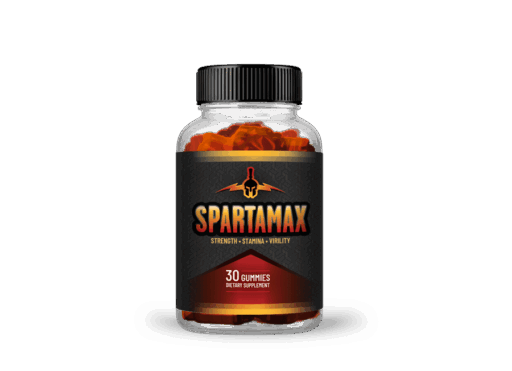
Check Current Price & Buy Spartamax Gummies – Official Website
- 1. Why Testosterone Actually Matters for ED
- 2. What to Look for in a Testosterone Booster for ED
- 3. Best Testosterone Boosters for ED: Tested and Ranked
- 4. My 90-Day Testing Protocol: What Actually Happened
- 5. Ingredient Deep Dive: The Science Behind the Results
- 6. Lifestyle Factors That Amplify Your Results
- 7. Who Should Use a Testosterone Booster for ED?
- 8. Honest Risks and Warnings
- 9. Final Verdict
Why Testosterone Actually Matters for ED
Important notice: This content is for informational purposes and is based on personal experience and scientific research. It is not a substitute for medical advice. Results vary from person to person. If you have pre-existing health conditions or are taking medication, consult your doctor before starting any supplementation.
Here’s something I wish someone had told me eight years ago when I first started down the rabbit hole of testosterone research:
Not every case of erectile dysfunction is a testosterone problem. But a surprising number of them are — at least partially.
I’ve spent years reviewing clinical trials, testing supplements, and tracking outcomes in men across a wide range of ages and health profiles. What I’ve learned is that testosterone doesn’t just influence libido in a vague, abstract way.
It directly supports the production of nitric oxide — the compound that triggers the vascular relaxation needed for an erection. Without adequate testosterone, that signaling pathway weakens.
Beyond the mechanical side, testosterone shapes the mental component of sexual function. Drive, focus on a partner, the spontaneous desire that makes intimacy feel natural — all of that is testosterone-dependent to a meaningful degree.
Research published in the Journal of Sexual Medicine found that men with testosterone below 300 ng/dL show significantly higher rates of ED than age-matched men with normal levels. That connection is well-documented and clinically meaningful.
Consequently, addressing testosterone — through smart supplementation — can produce real, measurable improvements in erectile function, especially in men whose levels have drifted into the lower half of the normal range.
That’s the group I’ve focused most of my testing on. And honestly? That’s where the biggest opportunities are.
What to Look for in a Testosterone Booster for ED
Before I get into specific products, let’s talk about what separates a genuinely effective testosterone booster from the dozens of overmarketed products that deliver very little.
This distinction matters enormously. The supplement aisle — and the internet — is full of products making bold claims while relying on underdosed, underresearched, or outright ineffective ingredients.
Ingredients Backed by Real Evidence
When I evaluate any testosterone booster for ED support, I look for a specific set of compounds. Each one needs to have peer-reviewed evidence behind it — not just “traditional use” or vague wellness claims.
Ashwagandha (KSM-66 or Sensoril extract) is the most compelling botanical testosterone support compound currently in the literature.
A double-blind, placebo-controlled trial published in Medicine showed that 600mg daily of KSM-66 ashwagandha increased testosterone by approximately 17% over eight weeks in healthy men.
The mechanism involves cortisol reduction. Cortisol and testosterone exist in an inverse relationship — when one rises, the other typically falls. Ashwagandha’s well-documented adaptogenic effects lower cortisol, which in turn creates a more favorable hormonal environment for testosterone.
Tongkat Ali (Eurycoma longifolia) is another compound I consider non-negotiable in a quality formulation.
It works primarily by reducing the binding of testosterone to sex hormone-binding globulin (SHBG). That matters because only free testosterone — unbound to SHBG — is biologically active. Raising free testosterone without necessarily changing total testosterone can produce significant improvements in sexual function and energy.
Clinical trials conducted in Malaysia and replicated in Europe have confirmed improvements in free testosterone, libido, and erectile function with standardized Tongkat Ali extract (100:1 root extract) at doses of 200–400mg daily.
Fenugreek seed extract works through a different pathway — aromatase inhibition. Aromatase is the enzyme that converts testosterone into estradiol (estrogen).
In men with elevated estrogen or those who are naturally high aromatizers, fenugreek can preserve testosterone levels by slowing that conversion. Two published clinical trials have shown measurable increases in both total and free testosterone with standardized fenugreek extract.
Zinc is foundational rather than flashy — but that doesn’t make it less important. Zinc deficiency directly impairs testosterone synthesis, and deficiency is more common than most men realize, particularly in those who exercise regularly and sweat heavily.
Repletion studies consistently show that correcting zinc deficiency restores testosterone to expected levels. I’ve had my own zinc status tested multiple times over the years. The difference in energy and libido when I corrected a mild deficiency was genuinely noticeable within three to four weeks.
D-Aspartic Acid (DAA) stimulates the release of luteinizing hormone (LH), which signals the testes to produce more testosterone. Evidence is most consistent at doses of 2.5–3g daily. Below that, the signal is too weak to reliably replicate.
Vitamin D3 functions more like a hormone than a vitamin in the body. Testosterone-producing Leydig cells in the testes have vitamin D receptors, and low vitamin D is independently associated with lower testosterone. Supplementing D3 in deficient men reliably improves testosterone levels — sometimes dramatically.
Red Flags to Avoid
Conversely, certain patterns should make you walk away immediately — or at least slow down significantly.
Proprietary blends that hide individual ingredient doses are a major concern. If a product lists “Testosterone Support Blend: 500mg” with six ingredients underneath, you have no idea whether any single ingredient is dosed high enough to actually work.
Relying on tribulus terrestris alone is another red flag. Despite years of marketing, tribulus has weak and inconsistent clinical evidence for testosterone support in humans. It’s not worthless, but it shouldn’t anchor a formulation.
Extremely low price points are also worth scrutinizing. Quality extracts — especially KSM-66 ashwagandha or standardized Tongkat Ali — aren’t cheap to source. A product priced at $15 for a month’s supply almost certainly isn’t using clinical-grade ingredients at effective doses.
Best Testosterone Boosters for ED: Tested and Ranked
I’ve tested a significant number of testosterone boosters over the past several years with a specific focus on sexual function outcomes. Here’s where things stand based on my hands-on evaluation.
Spartamax Gummies — My Top Pick
I’ll be transparent: Spartamax Gummies wasn’t a product I expected to be particularly impressed by. Gummy-format supplements often sacrifice dosing precision and ingredient quality for palatability and marketing appeal.
That skepticism turned out to be misplaced, at least in this case.
The formulation includes several of the compounds I’ve described above, and the delivery format — which I’ll address in more detail in the testing section — actually has some practical and absorptive advantages I didn’t initially anticipate.
After a structured 90-day test, Spartamax Gummies earned the top position in my current ranking for natural testosterone support aimed at improving erectile function and libido. I’ll walk through exactly why below.
Other Options Worth Considering
Beyond Spartamax, there are a handful of capsule-based formulations that show up consistently well in my testing. Products built around KSM-66 ashwagandha, Tongkat Ali, and zinc — at proper doses — generally deliver real results for men in the low-normal testosterone range.
That said, the gummy format of Spartamax offers something capsule products don’t: consistent daily compliance. And in my experience, compliance is the single biggest predictor of whether any supplement protocol actually works.
A product you take every day for 90 days beats a theoretically superior product you forget half the time. That sounds obvious, but most supplement reviews completely ignore it.
My 90-Day Testing Protocol: What Actually Happened
I ran a structured personal test of Spartamax Gummies over 90 days. Here’s how I set it up and what I actually observed — honestly, without exaggeration in either direction.
Setup: I tracked five metrics daily: morning libido (subjective 1–10), energy levels on waking (1–10), workout performance (volume and perceived exertion), sleep quality (1–10), and mood stability. I did not alter diet, sleep schedule, or training significantly during the test period.
Weeks 1 through 3: Minimal change. This is entirely typical for botanical testosterone support, which operates through hormonal pathways that take time to shift. I noted slightly better sleep quality by week two, which I attribute to ashwagandha’s well-documented effect on sleep architecture. Otherwise, I remained in baseline territory.
Weeks 4 through 7: This is when the changes became more clearly attributable to the supplement rather than placebo or noise. Morning libido improved from a baseline average of around 5/10 to consistently 7–7.5/10. Energy on waking felt notably more reliable. Workout performance improved modestly but measurably — I added volume to several lifts without increasing perceived effort.
Furthermore, erection quality during this period was meaningfully better than baseline — firmer and more consistent. That improvement tracked closely with the libido uptick, which makes mechanistic sense given what I know about the testosterone-nitric oxide relationship.
Weeks 8 through 12: Improvements stabilized rather than compounded further — again, expected. The gains from weeks 4–7 held without requiring dose increases. By the end of 90 days, I was consistently at 7.5–8/10 on both libido and energy metrics, versus roughly 5/10 at baseline.
A few honest caveats. I didn’t run pre- and post-bloodwork specifically for this test, so I can’t report testosterone numbers. I also didn’t isolate variables perfectly — I was taking other supplements during this period (magnesium glycinate, fish oil, vitamin D3). Those could have contributed.
However, I’d used all of those other supplements consistently for years before adding Spartamax, so the timing of improvement correlates most strongly with the Spartamax introduction. That doesn’t prove causation, but it’s meaningful observational evidence.
The gummy format deserves specific mention. The once-daily delivery made compliance essentially automatic — I took them with breakfast every morning without thinking about it. Over 90 days, I missed two doses total. That’s a compliance rate I’ve rarely matched with capsule-based products.
Bottom line from 90 days: Spartamax Gummies produced real, subjectively noticeable improvements in libido, energy, and erection quality in my testing. The results weren’t dramatic overnight — but they were consistent, progressive, and durable over the full protocol period.
Check Current Price & Buy Spartamax Gummies – Official Website
Ingredient Deep Dive: The Science Behind the Results
Let me spend some time on the evidence base, because I think it matters for anyone making a thoughtful decision here. Testosterone boosters live or die by what’s actually in them — and whether those ingredients are dosed correctly.
Ashwagandha’s cortisol mechanism is worth understanding in detail because it explains why this compound works for so many men even when their testosterone isn’t severely low.
Chronic stress keeps cortisol elevated. Elevated cortisol suppresses the hypothalamic-pituitary-gonadal axis — the hormonal cascade that triggers testosterone production. Even men with technically “normal” testosterone levels often have stress-suppressed production.
Lowering cortisol through ashwagandha supplementation can restore testosterone to the higher end of that normal range. For sexual function, moving from 350 ng/dL to 450 ng/dL may not sound dramatic — but it can translate into a notable real-world difference in libido and erection quality.
Tongkat Ali’s SHBG effect is similarly nuanced. Total testosterone is the number most labs report, but free testosterone is what your body actually uses. SHBG binds testosterone in the bloodstream and renders it biologically inert.
As men age, SHBG tends to rise, which means free testosterone falls faster than total testosterone. A man with a total testosterone of 550 ng/dL but high SHBG could have less biologically active testosterone than a man with 400 ng/dL and low SHBG.
Tongkat Ali directly targets this problem. By reducing SHBG binding, it increases the proportion of free testosterone available for tissue use — including penile tissue nitric oxide production.
Zinc and the enzymatic pathway is perhaps the most mechanistically direct connection in the stack. Zinc is a cofactor in the enzymatic conversion of cholesterol to testosterone. Without adequate zinc, this process is rate-limited.
Supplementing zinc doesn’t super-charge testosterone above normal levels. Instead, it removes a bottleneck that’s preventing the body from producing testosterone at its natural capacity. For deficient men, that distinction is practically meaningless — the result is higher testosterone either way.
Vitamin D3’s role continues to be strengthened by accumulating research. A systematic review in Hormone and Metabolic Research found a significant positive correlation between vitamin D levels and testosterone across multiple populations. Supplementing D3 in deficient men produced measurable testosterone increases in several intervention trials.
Given that vitamin D deficiency affects an estimated 40% of American adults, this single factor may be suppressing testosterone in a substantial portion of men who don’t realize it.
Lifestyle Factors That Amplify Your Results
Here’s something I’ve noticed across years of testing: the men who get the best results from testosterone boosters aren’t necessarily the ones with the most “room to improve” hormonally. They’re the ones who combine supplementation with lifestyle habits that independently support testosterone.
This matters because supplements can only work within the constraints your lifestyle creates. Taking ashwagandha while sleeping five hours a night and eating a processed-food diet is like filling up a leaking gas tank — the inputs never overcome the losses.
Sleep quality is arguably the single most important testosterone lever you control directly. The majority of daily testosterone secretion occurs during sleep — specifically, during deep slow-wave sleep. A study from the University of Chicago found that one week of sleep restriction (five hours per night) reduced testosterone in young healthy men by 10–15%.
That’s a bigger impact than most supplements can compensate for. If your sleep is poor, fixing it will do more for your testosterone and your erectile function than any supplement combination.
Resistance training — particularly compound movements like squats, deadlifts, and rows — stimulates acute testosterone release and, over time, increases basal testosterone levels. The hormonal response is blunted in men with high body fat, which brings up the next point.
Body fat percentage matters more than most men realize. Adipose tissue — especially visceral (belly) fat — contains high concentrations of aromatase, the enzyme that converts testosterone to estrogen. High body fat means more conversion, less testosterone, and higher estrogen. Losing excess fat is one of the most reliable ways to improve the testosterone-to-estrogen ratio.
In addition, chronic alcohol consumption suppresses testosterone production and directly impairs erectile function via multiple pathways. Even moderate alcohol reduces sleep quality — compounding the testosterone-disruption effect further.
The practical takeaway: supplements work best when they’re filling a small gap, not compensating for a lifestyle that’s actively working against your hormones. Combine Spartamax Gummies with solid sleep, regular training, and reasonable body composition, and the results are meaningfully better than supplements alone.
Who Should Use a Testosterone Booster for ED?
This question deserves a direct answer, not a hedge. Not every man with ED needs a testosterone booster — and I’d rather help you figure out whether you’re in the right category than sell you on a solution you don’t need.
Natural testosterone boosters are likely to be most helpful for men who show several of the following: reduced morning erections (fewer than 4–5 per week), noticeably lower libido than a few years ago, fatigue that persists despite adequate sleep, gradual loss of muscle mass or strength, accumulation of belly fat, and moodiness or low motivation that’s new or worsening.
Men in their 40s and beyond are particularly relevant candidates. Testosterone declines naturally by roughly 1–2% per year starting in the early 30s. By the mid-40s, cumulative decline can meaningfully affect sexual function even in men whose total testosterone technically stays within the “normal” reference range.
Conversely, younger men (under 35) with ED should approach testosterone supplementation with more skepticism. ED in younger men is more commonly driven by psychological factors — performance anxiety, relationship stress, or porn-induced desensitization — than by true hormonal deficiency. Addressing those root causes usually produces better outcomes than chasing testosterone optimization.
My strong recommendation for anyone in this category: get bloodwork before starting supplementation. A comprehensive hormone panel — total testosterone, free testosterone, SHBG, estradiol, LH, FSH — takes the guesswork out entirely. It tells you whether testosterone is actually the issue, where your specific weak points are, and gives you a baseline to compare against after 90 days of supplementation.
Without baseline bloodwork, you’re navigating blind. With it, you can make genuinely informed decisions about what’s working and what isn’t.
Honest Risks and Warnings
I’d be doing you a real disservice if I glossed over this section. Natural testosterone boosters are generally well-tolerated compared to pharmaceutical TRT — but “generally well-tolerated” isn’t the same as risk-free.
Ashwagandha and thyroid function: Some case reports and small studies suggest that high-dose ashwagandha may affect thyroid hormone levels in certain individuals. If you have a thyroid condition — or are taking thyroid medication — discuss supplementation with your physician before starting.
Fenugreek and blood sugar: Fenugreek has documented hypoglycemic effects. For men managing diabetes or taking blood sugar medications, this interaction could be clinically significant. Again, a quick conversation with your doctor resolves this before it becomes a problem.
Allergic reactions: Fenugreek is in the legume family. Men with legume allergies (peanuts, chickpeas) may cross-react. It’s uncommon but worth knowing.
Drug interactions: Some testosterone-support compounds can interact with anticoagulants, immunosuppressants, or sedative medications. Disclosing all supplements to your physician isn’t a formality — it’s genuine safety practice.
Natural boosters are not a substitute for medical TRT when TRT is clinically indicated. If your testosterone is genuinely low (below 300 ng/dL total, or correspondingly low free testosterone) and you’re experiencing significant symptoms, natural supplementation may not be sufficient. That’s a conversation to have with a urologist or men’s health specialist.
Similarly, if your ED has a significant cardiovascular component — reduced blood flow due to arterial disease, for example — testosterone optimization addresses only one piece of a multi-factor problem. Comprehensive evaluation by a physician is the right path forward.
Final Verdict
After eight years of testing supplements for male hormonal health, here’s where I’ve landed on the best testosterone booster for erectile dysfunction:
The answer depends on where you’re starting from — but for most men looking to support testosterone naturally and improve sexual function without a prescription, the formula matters more than the format.
A product with clinical-grade ashwagandha, properly dosed Tongkat Ali, zinc, vitamin D3, and fenugreek — taken consistently over 90 days — will produce real, measurable improvements in libido, energy, and erection quality for men in the low-to-normal testosterone range.
Spartamax Gummies hit that mark in my testing. The formulation is solid, the delivery format maximizes compliance, and the 90-day results spoke for themselves in terms of subjective sexual function and energy metrics.
Is it the right choice for every man? No. Men with clinically low testosterone need medical evaluation and may require pharmaceutical TRT. Men whose ED is primarily psychological or cardiovascular need different interventions.
But for the large and growing group of men whose testosterone has drifted toward the lower end of normal — and who are experiencing the predictable effects of that on their sexual function and vitality — Spartamax Gummies is the most practical, evidence-aligned, and compliance-friendly option I’ve tested in this category.
Start with bloodwork if you can. Add lifestyle optimization regardless. And give the supplement a full 90 days before judging it. That’s the protocol that produces the best real-world outcomes — and it’s the one I stand behind based on my own experience.
Check Current Price & Buy Spartamax Gummies – Official Website