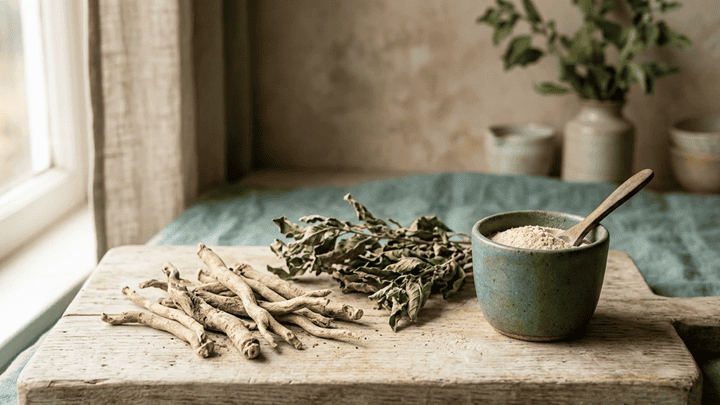
Ashwagandha Benefits for Men: What the Research Actually Shows
Walk into any gym, scroll through any wellness app, or peek inside a buddy’s supplement cabinet these days, and there’s a good chance you’ll spot a bottle of ashwagandha somewhere in the mix.
What used to be a niche Ayurvedic herb known mostly to yoga enthusiasts and alternative medicine fans has turned into one of the most talked-about supplements for men chasing better energy, calmer nerves, and stronger workouts.
But here’s the thing: hype and hard evidence don’t always line up, and a lot of what gets shared online about ashwagandha benefits for men leans more toward marketing copy than peer-reviewed science.
This guide digs into what randomized controlled trials, systematic reviews, and recent safety alerts actually say about testosterone, fertility, stress, muscle growth, sleep, and focus — plus how to pick a quality product, how much to take, and who should think twice before trying it.
Consider this your no-nonsense breakdown before you add anything new to your daily stack.
Important notice: This content is for informational purposes and is based on an analysis of scientific studies and public information regarding the ingredients. It is not a substitute for medical advice. Results vary from person to person. If you have pre-existing health conditions or are taking medication, consult your doctor before starting any supplementation.
- Overview
- What Is Ashwagandha, Exactly?
- Why Men Are Paying Closer Attention to Ashwagandha Right Now
- The Core Ashwagandha Benefits for Men
- How Ashwagandha Works Inside Your Body
- How to Choose an Ashwagandha Supplement
- How Much Ashwagandha Should You Take?
- Side Effects and Who Should Be Careful
- Conclusion
- Frequently Asked Questions
What Is Ashwagandha, Exactly?
Ashwagandha comes from the root of Withania somnifera, a small shrub with yellow flowers that grows across India, the Middle East, and parts of Africa.
You’ll also see it called “winter cherry” or “Indian ginseng,” though that second nickname is a bit misleading since it isn’t botanically related to actual ginseng at all — the comparison mostly comes from a shared reputation as an energy-supporting root.
It belongs to the nightshade family, the same plant group as tomatoes and eggplants, and Ayurvedic practitioners have relied on it for more than 3,000 years as a “Rasayana,” a category of herbs traditionally used to restore vitality and support long-term wellbeing.
Modern supplement makers classify it as an adaptogen, a term used for plant compounds believed to help the body cope with physical and mental stress rather than target one specific symptom or organ.
You’ll typically find it sold as capsules, powders you can stir into a smoothie, or gummies, with standardized root extract being the form used in the overwhelming majority of clinical research.
Some products blend in the leaf as well, which changes both the potency and the chemical profile in ways we’ll dig into further down.
Why Men Are Paying Closer Attention to Ashwagandha Right Now
It’s not your imagination — ashwagandha really has exploded in popularity over the past few years, and the market numbers back that up.
Estimates vary depending on which research firm you ask and how they define the category, but most trackers place the global ashwagandha market somewhere around $0.9 billion in 2026, with several projecting it will roughly double by the early 2030s on the back of double-digit annual growth.
Some of that demand is coming from men specifically: brands are increasingly marketing ashwagandha-based products aimed at gym-goers and stressed-out professionals, from standard capsules to on-the-go honey sticks blending it with other traditional Ayurvedic ingredients.
Why the sudden interest? A big part of it comes down to timing — modern work culture is relentless, sleep is often the first thing sacrificed, and a lot of men are looking for something that feels more natural than another cup of coffee or a prescription they’d rather avoid.
Add in a wellness industry that has gotten very good at packaging ancient remedies for a modern, science-curious audience, and it’s easy to see why this particular root ended up in the spotlight.
Whether it can actually deliver on that promise is a separate question, and that’s exactly what the rest of this article sets out to unpack with real data rather than guesswork.
The Bigger Adaptogen Trend Fueling the Interest
Ashwagandha isn’t riding this wave alone.
It’s part of a broader adaptogen movement that also includes rhodiola, holy basil, and various forms of ginseng, all marketed under the same basic pitch: help your body handle stress more gracefully instead of just masking the symptoms after the fact.
Think of an adaptogen less like a light switch and more like a thermostat — the goal isn’t to crank everything up or shut everything down, but to nudge your stress-response system back toward a comfortable middle ground.
That framing resonates with a lot of men who are wary of synthetic stimulants or who’ve already tried the usual energy drinks and decided the crash afterward isn’t worth it.
Sports nutrition brands have leaned into this hard, positioning ashwagandha as a recovery and performance aid rather than just a chill pill, which has pulled in an entirely new audience of lifters and endurance athletes who might never have considered it otherwise.
At the same time, health experts have pushed back on some of the wilder claims circulating online, where testimonials about skyrocketing testosterone and dramatic size gains often outpace what the actual data supports.
One nutrition-focused review published by Healthy Male, an Australian men’s health information service, points out that testosterone research on the herb involves small sample sizes and mixed results across studies — a useful reality check before you buy into any bottle promising miracles.
The Core Ashwagandha Benefits for Men
So what does the science actually show once you strip away the hype? Quite a bit, honestly — just not always in the dramatic, life-changing way influencer culture likes to suggest.
Research on ashwagandha spans several distinct areas relevant to men’s health: hormonal balance, physical performance, reproductive health, sleep quality, and mental sharpness, and different studies have approached each of these from slightly different angles, doses, and populations.
The honest takeaway is that effects tend to be moderate rather than extreme, and they show up most clearly in men who are already dealing with elevated stress, poor sleep, or specific health challenges rather than in guys who are already thriving across the board.
None of this makes the herb useless — moderate, well-supported benefits are still genuinely useful benefits — but it does mean you should walk in with realistic expectations rather than treating it like a steroid substitute, a fertility cure-all,
or an instant fix for whatever’s bothering you.
With that framing in mind, here’s what the research says about each specific area.
Support for Healthy Testosterone Levels
Let’s start with the benefit most men actually search for.
A 2021 meta-analysis published in Advances in Nutrition pooled four randomized, double-blind,
placebo-controlled trials covering 197 men and found that three of the four studies showed ashwagandha root or leaf extract raised testosterone more than a placebo after at least eight weeks of use — notably, out of a whole lineup of herbs reviewed, including Asian ginseng, rhodiola,
and maca, only ashwagandha and fenugreek extract came out looking genuinely promising.
In one frequently cited trial involving overweight and mildly obese men between 40 and 70, participants taking a daily ashwagandha extract saw testosterone rise by roughly 15% and DHEA-S, a hormone precursor involved in testosterone production, increase by about 18%,
with the biggest gains showing up among those who completed the full 16-week protocol.
A more recent randomized trial focused on men reporting lower sexual desire found a 17% average increase in testosterone alongside a meaningfully higher likelihood of improved scores on a validated sexual function questionnaire.
Researchers suspect part of the mechanism runs through cortisol: chronically elevated stress hormones can suppress the body’s ability to produce testosterone efficiently, so calming that stress response indirectly frees up room for healthier hormone production.
That said, the same Australian men’s health service mentioned earlier cautions that the effects are marginal, sample sizes remain small, and some trials find no significant benefit at all —
so think of this as a possible nudge in the right direction rather than a substitute for medical treatment if you’ve been diagnosed with clinically low testosterone.
Sperm Quality and Male Fertility Support
If testosterone is the benefit men search for most, fertility support might be the one with the strongest data behind it.
The most frequently cited trial here, led by researchers including Ambiye and colleagues, followed 46 men with oligospermia, a clinical term for low sperm count, who took a full-spectrum ashwagandha root extract for 90 days.
The results were striking: a 167% increase in sperm count, a 53% increase in semen volume, and a 57% improvement in sperm motility compared to only minimal changes in the placebo group.
That’s obviously a huge jump on paper, but it’s worth remembering these men started from a genuinely low baseline, so the same magnitude of change wouldn’t necessarily apply to someone whose sperm count is already normal.
More recent research extended this line of investigation to healthy men rather than only those diagnosed with fertility issues, finding meaningful increases in semen volume, sperm concentration, total sperm count,
and motility alongside rising testosterone levels after eight weeks of supplementation — suggesting the reproductive benefits may not be limited to men already struggling with low counts.
Another trial pitted ashwagandha directly against pentoxifylline, a medication sometimes used for male infertility, and found the herb produced comparable improvements in sperm count, motility, and morphology with a notably cleaner side-effect profile.
The proposed mechanism ties back to oxidative stress, a process that damages sperm cells over time; ashwagandha’s antioxidant compounds appear to help blunt that damage at the cellular level.
If you’re actively trying to conceive, this research is genuinely encouraging, but it’s still smart to loop in a fertility specialist rather than self-treating based on a supplement bottle alone.
Lower Cortisol and Better Stress Resilience
This is arguably where ashwagandha has earned its reputation most solidly.
The landmark 2012 trial that put KSM-66 ashwagandha on the map gave chronically stressed adults 300 milligrams of root extract twice daily for 60 days and found serum cortisol dropped by 27.9%, compared to just 7.9% in the placebo group —
a gap that held up under rigorous statistical testing.
Since then, a stack of follow-up studies has painted a fairly consistent picture: standardized extracts reliably lower circulating cortisol, the hormone your adrenal glands pump out when your body senses a threat.
Picture cortisol like a smoke alarm that’s supposed to go off during an actual fire but instead keeps blaring long after the smoke has cleared — that’s chronic stress in a nutshell, and it’s linked to poor sleep, stubborn weight gain, low libido, and a foggy mind.
A 2025 systematic review and meta-analysis confirmed significant reductions in both cortisol and validated anxiety scores like the Hamilton Anxiety Rating Scale after eight weeks of consistent use.
Here’s where it gets interesting, though: a separate 2025 meta-analysis found that while the biological marker of cortisol reliably drops,
the subjective “perceived stress” scores that people self-report don’t always shift by a statistically significant margin once you pool multiple trials together.
In other words, your bloodwork might look calmer even on days your brain doesn’t quite feel it yet — a good reminder that supplements work on biology first, and your subjective sense of calm can lag a little behind the numbers.
Building Strength and Boosting Exercise Performance
For the gym-focused crowd, this might be the most compelling category of research. The influential 2015 Wankhede study took 57 young men with little resistance-training experience, split them into ashwagandha and placebo groups, and had both follow an eight-week strength program.
The ashwagandha group nearly doubled their bench press gains compared to placebo, 46.0 kg versus 26.4 kg in one-rep max improvement, and saw notably bigger leg extension gains too, along with lower levels of creatine kinase,
a blood marker that spikes when muscles get damaged during hard training.
A follow-up study using 500 milligrams daily for 12 weeks in resistance-trained men reported similar improvements in strength and recovery,
while a more recent multicenter trial involving 80 participants of both sexes found gains not just in bench and leg press but in cardiorespiratory endurance and muscle girth across the arms, chest, and thighs.
It’s not a universal slam dunk, though — one study pairing ashwagandha with high-intensity interval training in young men found it didn’t meaningfully boost certain metabolic markers beyond what the training itself already produced,
a useful reminder that this herb supports your training rather than replacing the actual work.
A separate study on team-sport athletes during a demanding pre-season block found that 600 milligrams daily helped stabilize rising cortisol during that stressful training period and improved both perceived recovery and jump performance in male athletes,
suggesting real value specifically during stretches of heavy physical load.
Improving Sleep Quality
Ask any man juggling work stress, a training schedule, and a phone that never stops buzzing, and sleep is probably somewhere near the top of his wish list.
The National Institutes of Health’s Office of Dietary Supplements notes that a small but growing body of research shows ashwagandha extract can improve sleep quality, efficiency, total sleep time, and the time it takes to fall asleep,
with the biggest benefits showing up in people who already struggle with insomnia rather than those already sleeping fine.
In one six-week trial of 150 adults, both the ashwagandha and placebo groups reported some improvement, but the ashwagandha group’s sleep quality scores improved by 72% compared to just 29% in the placebo group.
A separate 10-week study focused specifically on people with diagnosed insomnia found participants fell asleep faster, spent more efficient time actually asleep, and reported better subjective sleep quality than the placebo group, with the difference reaching clear statistical significance.
A meta-analysis pooling five randomized trials and 400 participants confirmed a small but real overall effect on sleep, one that got noticeably stronger among people with diagnosed insomnia, at daily doses of 600 milligrams or more, and after at least eight weeks of consistent use.
Just don’t expect it to knock you out the way a sleep aid would on night one — this looks like a gradual, cumulative effect rather than an instant lights-out switch.
Sharpening Focus and Mental Clarity
The cognitive research is younger than the stress and sleep data, but it’s growing fast and the early signals are encouraging.
A well-designed trial gave 130 healthy but stressed adults a sustained-release 300-milligram capsule daily for 90 days and used a validated computerized memory test to track results, finding significantly improved recall memory alongside lower perceived stress, lower cortisol,
better sleep scores, and higher self-reported happiness in the ashwagandha group.
Separate research on adults with mild cognitive impairment found improvements in immediate memory, working memory, attention, and processing speed after eight weeks of supplementation, which is notable territory for a plant-based supplement to be touching.
Interestingly, one small crossover study found that even a single 400-milligram dose could measurably improve working memory and sustained attention within the same day,
hinting that some cognitive effects might kick in faster than the weeks-long timelines typically associated with stress and hormone changes.
None of this means ashwagandha will turn you into a memory champion overnight, and researchers themselves are careful to point out that sample sizes remain small and larger, more definitive trials are still underway.
But for a supplement that started out being studied mostly for stress and sleep, the fact that cognitive benefits keep showing up as a side effect of that stress reduction is a genuinely interesting thread of ongoing research.
How Ashwagandha Works Inside Your Body
Zoom out from the individual studies for a second, and a fairly coherent story emerges about why this root does what it does across so many seemingly unrelated areas.
As an adaptogen, ashwagandha’s job isn’t to sedate you, hype you up, or target one single organ system — it’s believed to work by helping regulate the hypothalamic-pituitary-adrenal (HPA) axis,
the communication loop between your brain and adrenal glands that governs how your body responds to stress from moment to moment.
When that axis runs smoothly, cortisol rises when it needs to and settles back down once the stressor passes, letting your body return to a resting state efficiently.
When it’s dysregulated from chronic, unrelenting stress, cortisol can stay elevated far longer than it should, quietly interfering with sleep, hormone balance, and recovery along the way without you necessarily noticing the connection.
This is also part of why the same herb shows up in research on stress, sleep, testosterone, and even muscle recovery — they’re not entirely unrelated benefits so much as downstream effects of a calmer, better-regulated stress response system working the way it’s supposed to.
Withanolides: The Compounds Doing the Heavy Lifting
The active ingredients responsible for most of these effects are a family of steroidal compounds called withanolides, of which researchers have identified roughly 40 across the plant’s roots, leaves, and berries,
alongside more than a dozen alkaloids and additional compounds known as sitoindosides.
These withanolides are believed to interact with the body’s stress-signaling pathways and carry antioxidant and anti-inflammatory properties that researchers are still working to fully map out through ongoing laboratory research.
One withanolide in particular, withaferin A, is more concentrated in the leaves than in the root and is considered more biologically aggressive,
which is a big part of why root-only extracts have built such a strong safety track record compared to products that blend in leaf material without careful standardization.
Understanding this distinction matters more than it might seem at first glance,
because it directly explains why two products both labeled “ashwagandha” can behave quite differently depending on which part of the plant went into the bottle and how concentrated the extraction process made the final product.
How to Choose an Ashwagandha Supplement
Here’s something the supplement aisle doesn’t advertise clearly enough: not all ashwagandha products are created equal, and the specific extract you buy can matter just as much as whether you take it at all.
Because herbal supplements aren’t regulated the same way prescription drugs are, quality, potency, and even the actual plant parts used can vary wildly from one brand to the next, which is exactly why so much of the clinical research centers on a handful of specific,
trademarked extracts rather than “ashwagandha” as one generic category.
That distinction gets lost in most marketing copy, where a bottle might simply say “clinically studied” without telling you whether the studies in question actually used the product you’re holding or a completely different formulation.
Walking in informed means you’re far more likely to actually replicate the results you read about in a study, rather than gambling on a product that was never tested in a lab at all.
KSM-66 vs. Sensoril vs. Plain Root Powder
The three names you’ll run into most often are KSM-66, Sensoril, and plain root powder, and they’re genuinely different products despite all wearing the same “ashwagandha” label on the front of the bottle.
KSM-66 is a root-only extract made through a proprietary, solvent-free process, standardized to a minimum of 5% withanolides, and it currently has the deepest clinical research base of any branded extract, with more than 20 published trials covering stress, testosterone,
and strength-training outcomes.
Sensoril, by contrast, blends root and leaf material and concentrates withanolides to roughly 10% or higher, meaning smaller doses can pack a comparable punch; its research base leans more heavily toward sleep quality and evening relaxation,
and many users find it slightly more sedating than KSM-66.
Plain, unstandardized root powder is the traditional Ayurvedic form, but it comes with a catch: because it isn’t concentrated or standardized, you’d need considerably more of it to match the withanolide content used in actual clinical trials,
and potency can shift noticeably from batch to batch depending on the source.
Here’s how the three stack up side by side:
| Type | What It Is | Withanolide Content | Typical Daily Dose | Best Evidence For |
|---|---|---|---|---|
| KSM-66 | Root-only extract, solvent-free process | ~5% | 300–600 mg | Stress and cortisol reduction, testosterone support, strength and recovery |
| Sensoril | Root and leaf extract, water-based extraction | ~10%+ | 125–250 mg | Sleep quality, evening relaxation, anxiety reduction |
| Raw Root Powder | Ground, dried root, minimal processing | Not standardized | ~3–6 g | Traditional Ayurvedic use; less predictable, research-backed results |
Standardized Extract vs. Whole Root Powder
The deeper issue behind that table is the difference between a standardized extract and whole root powder as broad categories, beyond just the specific branded products.
Standardization means a manufacturer has measured and guaranteed a consistent percentage of the active withanolide compounds in every batch,
which is exactly what allows researchers to design a study around something like “300 milligrams containing 5% withanolides” and have reasonable confidence that the next batch will behave similarly under testing.
Whole root powder skips that step entirely, so while it retains the complete natural profile of compounds found in the raw root, which some traditional practitioners actually prefer for that very reason,
you’re essentially guessing at potency unless the specific batch you bought has been independently lab-tested.
For most men trying to replicate the benefits described in actual clinical research, a standardized extract is going to be the more reliable, predictable choice, simply because that’s what the vast majority of the supporting science was actually built around in the first place.
What to Actually Check on the Label
Once you’ve settled on extract versus powder, the label itself deserves a closer look than most people bother giving it at the store.
Third-party testing certifications like NSF Certified for Sport, USP verification, or an independent lab report from a service like ConsumerLab offer real reassurance that what’s on the label matches what’s actually inside the capsule,
which matters a lot given how loosely herbal supplements are regulated compared to pharmaceuticals.
You’ll also want to confirm the withanolide percentage is actually disclosed rather than hidden behind a vague “proprietary blend,” since that kind of language often means the manufacturer doesn’t want you calculating how little of the active ingredient you’re actually getting per serving.
Check whether the product uses root only or a root-and-leaf combination, since that single detail tells you a lot about which body of research it’s likely to align with and how it might make you feel day to day.
Finally, a brand that references the exact clinical studies behind its specific branded extract,
rather than vaguely gesturing at “studies show,” is generally a sign you’re dealing with a company that takes the underlying science seriously rather than one just riding the adaptogen trend for sales.
How Much Ashwagandha Should You Take?
Dosing recommendations vary depending on your specific goal, but most of the clinical research clusters around a daily range of 300 to 600 milligrams of standardized root extract, typically split into two doses and taken with food to minimize any stomach upset.
If you’re using Sensoril or a similarly high-concentration extract, the effective dose tends to run lower, often somewhere between 125 and 250 milligrams daily, simply because you’re getting a higher percentage of withanolides per milligram of product.
Anyone using raw root powder instead of a standardized extract is looking at a considerably larger daily amount, generally in the range of 3 to 6 grams, since unstandardized powder is far less concentrated by comparison.
Most people just starting out do well beginning at the lower end, somewhere around 150 to 300 milligrams daily, and adjusting upward gradually once they know how their own body responds to it.
As for timing your expectations, don’t expect overnight magic: most clinical trials run somewhere between 8 and 12 weeks before measuring meaningful changes, though some people notice subtle shifts in mood or sleep within the first couple of weeks of consistent use.
It’s also worth being upfront that long-term safety data beyond roughly 90 days of continuous use remains limited, which is part of why many practitioners suggest cycling, using it consistently for a few months and then taking a break,
rather than treating it as something to take indefinitely without ever checking back in with a doctor about it.
Side Effects and Who Should Be Careful
For most healthy adults taking a reasonable dose for a limited stretch of time, ashwagandha has a solid safety record — clinical trials collectively involving well over a thousand participants have generally reported good tolerability,
with the most common complaints being mild stomach upset, drowsiness, or an occasional headache.
That said, a “natural” supplement isn’t automatically a risk-free one, and recent developments deserve your attention if you’re considering adding this to your routine.
Australia’s Therapeutic Goods Administration issued safety updates in 2023 and again in 2025 documenting a total of 12 liver injury cases reported internationally through the Netherlands Pharmacovigilance Centre, most of which resolved once the person stopped taking the supplement,
though four cases required hospitalization.
Separately, a hospital-based review out of India identified 8 cases of liver injury tied to single-ingredient Withania somnifera products across various forms including powders, tablets, and teas,
and a broader 2026 scoping review of the global medical literature through the end of 2025 found 25 documented patients with liver injury linked to ashwagandha use across 13 published case reports worldwide.
These remain rare events relative to how widely the supplement is used, and regulators in Iceland and Denmark have already issued consumer warnings while the European Food Safety Authority continues an ongoing formal safety review of the herb.
If you notice unusual fatigue, nausea, stomach pain, loss of appetite, unusually dark urine, or a yellowish tint to your skin or eyes after starting ashwagandha, stop taking it and see a doctor promptly rather than waiting it out.
There are other groups who should be especially cautious too: because the herb can raise thyroid hormone levels, anyone with hyperthyroidism or Graves’ disease should talk to a doctor before starting, and people with autoimmune conditions like lupus, rheumatoid arthritis,
or Hashimoto’s thyroiditis should be careful given the herb’s immune-stimulating properties.
Ashwagandha can also interact with sedatives, thyroid medications, immunosuppressants, blood pressure drugs, and diabetes medications, and it isn’t recommended during pregnancy or breastfeeding under any circumstances.
None of this means you should panic if you’ve already been taking it without issue, but it does mean a quick conversation with your doctor is a genuinely smart move before you start, especially if you fall into any of these categories.
Conclusion
Strip away the influencer hype and the miracle-cure marketing, and what’s left is a genuinely interesting herb with real, if modest, science behind it.
The strongest evidence points toward stress and cortisol reduction, with respectable data also backing sleep quality, fertility support, and strength-training recovery, while testosterone and cognitive benefits look promising but somewhat more variable across individual studies.
What separates a good experience from a disappointing one usually comes down to details most men skip over entirely: choosing a standardized, third-party tested extract like KSM-66 or Sensoril rather than a mystery powder, sticking to a sensible dose in the 300 to 600 milligram range,
giving it a full 8 to 12 weeks before judging results, and staying alert to your body’s response given the recent liver-safety signals regulators have flagged internationally.
Ashwagandha isn’t a replacement for sleep, training, nutrition, or medical care when something is genuinely wrong hormonally — think of it as a supporting player rather than the star of the show.
Used thoughtfully, with realistic expectations and a quick check-in with your doctor if you have any underlying health conditions, it’s a reasonable, evidence-informed addition to a lot of men’s wellness routines.
Frequently Asked Questions
Does ashwagandha really raise testosterone in every man who takes it?
No. The research shows modest, statistically significant increases in several studies, but the effect tends to be more noticeable in men dealing with elevated stress, a lower baseline testosterone level, or those pairing it with resistance training.
It isn’t a substitute for medical treatment if you have clinically diagnosed low testosterone, and some trials have found no significant benefit at all.
How long does it take to notice any effects?
Most clinical trials measure meaningful changes after 8 to 12 weeks of consistent daily use, so patience matters here.
That said, some research suggests certain effects, like small improvements in memory and attention, can appear within hours of a single dose, while sleep and mood-related benefits often take a few weeks to become noticeable.
Can ashwagandha help with erectile dysfunction or low libido?
The evidence is more indirect than direct. Studies on men with lower sexual desire have found improvements in sexual function scores alongside modest testosterone increases, most likely tied to stress reduction rather than any direct effect on blood flow.
It shouldn’t be treated as a proven ED treatment, and you shouldn’t expect pharmaceutical-level results from it.
Is it safe to take ashwagandha every day for months or years?
Most of the supporting research only covers 8 to 12 weeks of continuous use, and regulators in several countries have flagged rare but real cases of liver injury in recent years.
Many practitioners recommend cycling on and off every few months and checking in with a doctor periodically rather than taking it indefinitely without any oversight.
Can I take ashwagandha alongside other supplements or medications?
It’s generally fine to combine with most everyday supplements, but caution is warranted if you’re on thyroid medication, blood pressure drugs, diabetes medication, sedatives, or immunosuppressants, since ashwagandha can interact with all of these.
It should also be avoided during pregnancy or breastfeeding, and anyone with an autoimmune or thyroid condition should check with a doctor before starting.