L-Arginine: Benefits, Dosage, Side Effects, and Everything You Need to Know
Ever picked up a pre-workout tub, a heart-health supplement, or even a men’s wellness product and noticed the same ingredient sitting near the top of the label? There’s a good chance it was L-arginine.
This amino acid has quietly built a reputation as one of the most talked-about supplements in the wellness world, showing up everywhere from bodybuilding forums to cardiology clinics.
But here’s the thing: a lot of what gets repeated about L-arginine online is a strange mix of solid science and wishful marketing, and separating the two isn’t always easy when you’re standing in a supplement aisle trying to make a decision.
I’m going to walk you through what L-arginine actually does inside your body, which benefits genuinely hold up under research, how much you’d realistically need for a given goal, and just as important, when this supplement can do more harm than good.
Think of this as the straightforward guide you’d want a knowledgeable friend to give you before you add anything to your cart, minus the exaggerated claims plastered across so many product pages.
Before diving into the details, it helps to zoom out for a second. L-arginine isn’t some obscure lab-created compound; it’s a naturally occurring building block that your body already produces and that shows up in everyday foods like chicken, fish, and peanuts.
What turns it into a supplement worth discussing is its starring role in a process called nitric oxide production, which affects everything from blood flow to wound healing to how your muscles perform under load.
That single mechanism explains why you’ll find L-arginine marketed for such wildly different purposes, from lowering blood pressure to boosting the gym-floor “pump.” Once you understand that underlying mechanism, the rest of this supplement’s story, including its real benefits, its real limits,
and its real risks, starts to make a lot more sense. The global market for arginine-based supplements has been climbing steadily too, with multiple industry analyses pointing to continued growth through the early 2030s as more people search for natural ways to support circulation and recovery.
Important notice: This content is for informational purposes and is based on an analysis of scientific studies and public information regarding the ingredients.
It is not a substitute for medical advice. Results vary from person to person. If you have pre-existing health conditions or are taking medication, consult your doctor before starting any supplementation.
- L-Arginine: Benefits, Dosage, Side Effects, and Everything You Need to Know
- What Is L-Arginine, Exactly?
- The Science Behind L-Arginine and Nitric Oxide
- Top Evidence-Backed Benefits of L-Arginine
- How Much L-Arginine Should You Take?
- Side Effects and Safety Concerns You Shouldn’t Ignore
- L-Arginine vs. L-Citrulline: Which One Wins?
- Best Natural Food Sources of L-Arginine
- How to Choose a Quality L-Arginine Supplement
- Conclusion
- Frequently Asked Questions
- Sources
What Is L-Arginine, Exactly?
L-arginine is classified as a semi-essential amino acid, sometimes called “conditionally essential,” which is a fancy way of saying your body can usually make enough of it on its own, except when it can’t.
Under normal, healthy conditions, your liver and kidneys produce a steady internal supply through a pathway involving another amino acid called citrulline.
But during periods of significant physical stress, such as recovering from surgery, healing a serious wound, fighting an infection, or going through rapid growth as an infant, the demand for arginine can outpace what your body manufactures on its own.
That’s the window where dietary intake, and sometimes supplementation, starts to matter more. It’s a similar concept to how your body can usually produce enough vitamin D from sunlight, until winter rolls around and that internal production quietly falls short of what you need.
Arginine works the same way: mostly self-sufficient, until circumstances change the equation.
How Your Body Uses This Amino Acid
Once arginine is circulating in your bloodstream, it gets put to work in several different biological pathways simultaneously, which is part of why this single molecule shows up in such varied health conversations.
It serves as one of the raw materials your cells use to build new proteins, since every amino acid is essentially a building block in that larger protein-construction process.
It also plays a central role in the urea cycle, the process your liver uses to detoxify ammonia, a byproduct of protein metabolism, and convert it into urea for safe excretion through urine.
Beyond that, arginine acts as a precursor for creatine synthesis, which matters for anyone interested in muscle energy production, and it contributes to polyamine synthesis, a process tied to cell growth and division.
The single most talked-about function, though, and the one that drives nearly every supplement claim you’ll encounter, is arginine’s role as the direct precursor to nitric oxide.
Without adequate arginine on hand, your body simply can’t produce this signaling molecule through its primary enzymatic pathway, which is exactly why so much of the marketing conversation around this amino acid circles back to blood flow and circulation.
The Science Behind L-Arginine and Nitric Oxide
Here’s where things get genuinely interesting from a physiology standpoint. Inside the cells lining your blood vessels, an enzyme called nitric oxide synthase (NOS) grabs onto arginine molecules and converts them into nitric oxide, releasing citrulline as a byproduct in the process.
Nitric oxide is technically a gas, and a remarkably short-lived one at that, often breaking down within seconds of being produced.
Despite that fleeting existence, it acts as one of the most important signaling molecules in your entire cardiovascular system, communicating with the smooth muscle cells that wrap around your blood vessels and telling them to relax.
When those muscle cells relax, the blood vessel widens, blood pressure eases, and circulation improves throughout the tissue being supplied.
This entire arginine-to-nitric-oxide pathway is sometimes referred to as the “NO pathway” in research literature, and it’s genuinely one of the more elegant examples of how a single amino acid can ripple outward into effects on organs as different as your heart, your skin,
and your reproductive system.
The Vasodilation Effect, Explained
Think of your blood vessels like a garden hose, and nitric oxide as the hand that loosens the nozzle. A constricted hose forces water through a narrow opening under pressure, while a relaxed, open hose lets water flow freely with far less resistance.
That’s essentially what vasodilation does inside your arteries: it widens the passage, easing the pressure your heart has to generate to keep blood moving and improving how efficiently oxygen and nutrients reach your muscles, organs, and skin.
This is precisely why arginine gets linked to so many different health outcomes at once.
Improved circulation touches nearly everything, from how quickly a wound closes to how much oxygen reaches a working muscle during a hard set at the gym to how effectively blood reaches the tissues involved in sexual arousal.
Researchers have spent decades studying this pathway because it sits at the intersection of so many chronic conditions, including hypertension, diabetes, and cardiovascular disease, all of which involve some degree of impaired nitric oxide signaling.
That said, having a plausible mechanism doesn’t automatically guarantee that swallowing a scoop of arginine powder will meaningfully move the needle on any of these conditions, which brings us to what the actual clinical research shows.
Top Evidence-Backed Benefits of L-Arginine
Supplement marketing loves to treat every plausible mechanism as a guaranteed outcome, but real research is messier and far more interesting than that.
Some of arginine’s proposed benefits are backed by a genuinely solid body of clinical evidence, while others rest on a handful of small studies, animal research, or theoretical reasoning that hasn’t yet been confirmed in large human trials.
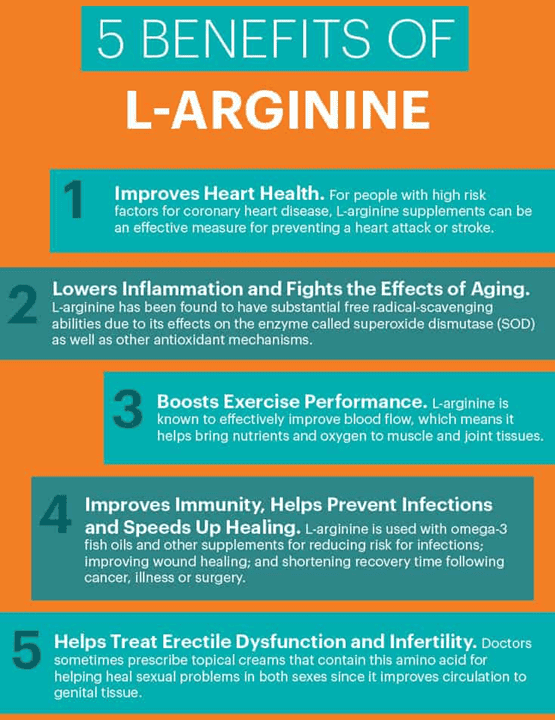
Mayo Clinic notes that L-arginine is generally considered safe and might be effective for lowering blood pressure, easing angina symptoms, improving peripheral artery disease, and treating erectile dysfunction that stems from physical causes.
That’s a meaningfully different message than the sweeping “cures everything” tone you’ll find on some product pages, and it’s worth sitting with that distinction as you read through the specific benefit categories below.
I’ve organized the strongest, most researched use cases first, moving toward the ones with more mixed or preliminary support, so you can calibrate your expectations accordingly.
Heart Health and Blood Pressure Support
This is arguably where arginine has the most consistent research behind it.
Multiple clinical trials and reviews have found that oral arginine supplementation can produce modest reductions in blood pressure among people with mildly elevated readings, existing hypertension, or diabetes-related vascular issues, largely through that vasodilation mechanism described earlier.
Research has also explored arginine’s role in easing angina, the chest pain that occurs when heart muscle isn’t getting enough oxygenated blood, with some studies suggesting it can improve symptoms and quality of life for people dealing with mild to moderate forms of this condition.
There’s also promising, though more preliminary, research into arginine’s use for pregnancy-related blood pressure complications, including gestational hypertension and preeclampsia,
though this is squarely a “talk to your OB before trying anything” territory rather than a self-directed supplement decision.
It’s worth being precise here rather than sweeping: this cardiovascular support applies to general blood pressure management and specific circulatory conditions, not to recovery immediately following a heart attack,
which is a distinction serious enough that it gets its own dedicated section further down this guide.
The takeaway for now is that arginine’s blood pressure and circulation benefits are genuinely among the better-supported claims in the supplement world, even if the effect sizes tend to be modest rather than dramatic.
Exercise Performance and the “Pump” Myth
Walk into any supplement store and you’ll find arginine featured prominently in pre-workout formulas, usually alongside promises of bigger muscle pumps and enhanced performance. The reality is more complicated, and honestly, a little disappointing for arginine specifically.
A sports science review from the Gatorade Sports Science Institute concluded that oral arginine doesn’t reliably improve aerobic exercise performance in either recreationally active people or well-trained athletes,
and several controlled trials have found no meaningful difference in nitric oxide production, lactate clearance, or power output when athletes supplemented with arginine compared to a placebo.
Part of the problem is pharmacokinetic: oral arginine gets broken down substantially by an enzyme called arginase in your gut and liver before it ever reaches your bloodstream in meaningful quantities, blunting the very effect people are hoping for.
Interestingly, some researchers now believe that the “pump” sensation many lifters associate with arginine may actually stem more from a temporary rise in insulin than from any direct nitric oxide boost.
None of this means exercise-focused nitric oxide support is a dead end, though; it just means arginine specifically isn’t the most efficient tool for that particular job,
which is a big part of why citrulline and dietary nitrates from sources like beetroot juice have become more popular alternatives in serious sports nutrition circles, a comparison I’ll get into in more detail later in this guide.
Erectile Dysfunction and Sexual Health
Because erections depend heavily on blood flow into penile tissue, and nitric oxide is the exact signaling molecule responsible for that localized vasodilation, arginine’s potential role in erectile dysfunction makes intuitive biological sense.
Mayo Clinic states that oral arginine might improve sexual function in men whose erectile dysfunction stems from a physical, vascular cause rather than a purely psychological one, and several small clinical trials support this,
particularly when arginine is combined with other compounds like pycnogenol, a pine bark extract.
It’s the same underlying pathway that prescription medications like sildenafil target, though through a different mechanism, and that overlap actually matters practically:
combining arginine supplements with PDE5-inhibitor medications such as sildenafil or tadalafil can produce additive blood-vessel-relaxing effects, occasionally leading to symptoms like dizziness, lightheadedness, or a drop in blood pressure.
If you’re already using a prescription for erectile dysfunction, this is a conversation to have with a doctor before layering arginine supplementation on top, rather than a combination to experiment with quietly on your own.
For men without an existing prescription who are curious about a more natural first step, the research is encouraging enough to be worth a conversation with a healthcare provider,
particularly since the underlying causes of erectile dysfunction can vary so widely from person to person and deserve a proper diagnosis rather than guesswork.
Wound Healing and Recovery
This benefit doesn’t get nearly as much marketing attention as blood pressure or the gym-related claims, but the research supporting it is honestly some of the oldest and most rigorous in the entire arginine literature.
Classic studies out of Johns Hopkins and Sinai Hospital in Baltimore, dating back to the 1980s and 1990s, found that arginine supplementation measurably increased collagen deposition at wound sites, boosted markers of immune cell activity,
and improved wound-healing outcomes in both healthy volunteers and elderly patients specifically.
The mechanism ties back to arginine’s dual role as both a nitric oxide precursor, which supports blood flow to the healing site, and a building block for collagen synthesis, the structural protein your body needs to physically rebuild damaged tissue.
This is part of why arginine shows up as a component in specialized clinical nutrition formulas given to patients recovering from major surgery, severe burns, or trauma, where the body’s baseline production simply can’t keep pace with the repair demands being placed on it.
For everyday recovery purposes, like bouncing back from a minor injury or supporting general tissue repair, this research is genuinely reassuring,
though it’s also a reminder that arginine’s benefits often show up most clearly in people whose bodies are under real physiological stress rather than in already-healthy individuals looking for a marginal edge.
Blood Sugar and Metabolic Health
Emerging research has also connected arginine to improvements in glucose metabolism and insulin sensitivity, particularly in people dealing with prediabetes, type 2 diabetes, or obesity-related metabolic dysfunction.
Preclinical and clinical studies alike have shown that arginine supplementation can help reduce oxidative stress, support healthier beta-cell function in the pancreas (the cells responsible for producing insulin), and in some research,
modestly improve how effectively the body clears glucose from the bloodstream after eating.
Animal studies have gone a step further, suggesting arginine may help reduce adiposity, the medical term for excess fat tissue, and shift the balance between metabolically active brown fat and standard white fat storage,
though it’s worth being cautious about extrapolating rodent findings directly onto human outcomes.
Ongoing clinical trials continue to investigate arginine’s role specifically in prediabetic populations,
examining whether consistent supplementation can meaningfully delay the progression toward full type 2 diabetes by addressing some of the underlying vascular and inflammatory dysfunction that tends to accompany insulin resistance.
If you’re managing blood sugar concerns, this research is worth knowing about, but it absolutely should not replace prescribed diabetes medication or a structured care plan; at best, it’s a supporting player worth discussing with your doctor, not a standalone treatment strategy.
How Much L-Arginine Should You Take?
There’s no single, universally agreed-upon dose here, and that’s honestly one of the more frustrating aspects of researching this supplement, since studies have used wildly different amounts depending on the health outcome being tested.
You’ll find research protocols using anywhere from 1.5 grams a day on the low end up to 30 grams a day in more intensive clinical settings, which is an enormous range that makes generic dosing advice tricky to give responsibly.
For general wellness and everyday supplementation purposes, though, a much narrower and more practical range tends to apply,
and most reputable sources converge on similar territory once you filter out the more extreme clinical trial dosages designed for specific medical conditions under supervision.
The right number for you really does depend on what you’re hoping to achieve, your body weight, and any underlying health conditions that might shift that calculation in either direction.
Typical Dosage Ranges by Goal
For general cardiovascular support and everyday wellness, most healthy adults land somewhere between 2 and 3 grams daily, which aligns with the doses used in a number of blood-pressure-focused studies.
If you’re targeting more specific outcomes, like exercise performance or erectile dysfunction support, research has often used higher amounts, typically in the 3 to 9 gram range per day,
with the blood-pressure-lowering effect specifically appearing strongest somewhere within that same 3-to-9-gram window according to independent research analysis from Examine.com.
Clinical and hospital settings addressing wound healing, post-surgical recovery, or more serious cardiovascular conditions have used considerably higher doses under direct medical supervision, sometimes reaching into the 15-to-30-gram range, but this territory genuinely isn’t appropriate for casual,
unsupervised, at-home use. The National Institutes of Health generally regards doses up to about 9 grams per day as reasonably safe for several weeks of consistent use in healthy adults, which is a helpful ceiling to keep in mind if you’re supplementing on your own without medical guidance.
Going meaningfully beyond that ceiling without a healthcare provider’s involvement isn’t just unnecessary for most goals; it also meaningfully increases your odds of unpleasant digestive side effects, which brings us to the next practical consideration.
Timing and Splitting Your Dose
Taking more than about 10 grams of arginine in a single sitting tends to trigger gastrointestinal distress for a lot of people, including bloating, cramping, and diarrhea,
so splitting your total daily amount into two or three smaller doses spread across the day is a genuinely practical strategy rather than just a nice-to-have suggestion.
Many people choose to take a dose on an empty stomach, roughly 30 to 60 minutes before a workout, if exercise performance or that circulation-driven “pump” sensation is the primary goal, since this timing theoretically allows for peak blood levels around the time they’ll actually be training.
That said, there isn’t strong evidence that timing dramatically changes outcomes for most other use cases like blood pressure management or general wellness, so consistency day-to-day probably matters more than hitting some precise window down to the minute.
If you’re new to arginine supplementation, starting at the lower end of your target range and gradually working upward over a week or two gives your digestive system time to adjust and lets you identify your personal tolerance threshold before committing to a higher daily amount.
And regardless of which goal you’re chasing, sticking with the same brand and dosage form consistently, rather than switching products frequently, makes it much easier to actually gauge whether the supplement is doing anything noticeable for you.
Side Effects and Safety Concerns You Shouldn’t Ignore
Short-term arginine use at the doses discussed above is generally well tolerated by most healthy adults, but “generally well tolerated” isn’t the same thing as “risk-free for everyone,” and this is the section of the guide I’d genuinely encourage you not to skim.
The most common side effects are gastrointestinal, including nausea, bloating, abdominal pain, and diarrhea, particularly at higher doses or when the full daily amount is taken all at once rather than split up.
Some people also report headaches, a bitter or metallic taste, numbness or tingling sensations, and heart palpitations, though these tend to be less common than the digestive complaints.
Because arginine actively lowers blood pressure through vasodilation, one of the more predictable side effects is hypotension, or blood pressure dropping lower than intended, which can show up as dizziness, lightheadedness, or fainting,
especially in people who already run on the lower end of normal blood pressure or who are combining arginine with blood-pressure-lowering medications.
There’s also some preliminary research suggesting long-term, high-dose use could place additional strain on the kidneys over time, though the human data here remains limited enough that it’s more of a reason for caution than a settled conclusion.
The Heart Attack Warning You Need to Know
This is genuinely the single most important safety point in this entire guide, and it doesn’t get nearly enough attention in casual supplement marketing.
A landmark clinical trial published in the Journal of the American Medical Association in 2006, known as the VINTAGE MI study, investigated whether arginine supplementation could help patients recover after a first heart attack.
Researchers from Johns Hopkins gave 153 patients either a placebo or arginine at a goal dose of 3 grams three times daily for six months following their myocardial infarction.
The trial was stopped early after six patients in the arginine group died during the study period, compared to zero deaths in the placebo group, and the researchers found no improvement in vascular stiffness or heart function to offset that troubling signal. Study co-author Dr.
Gary Gerstenblith, a Johns Hopkins professor of medicine, noted plainly that “L-arginine administration did not improve cardiac remodeling over a six-month period” during the trial.
The finding was serious enough that Health Canada subsequently issued a formal advisory recommending that people who have previously had a heart attack avoid L-arginine supplements entirely,
and required updated warning labels on arginine products sold in that country as a direct result.
If you or someone you’re shopping for has a history of myocardial infarction, this isn’t a minor footnote to skim past; it’s a legitimate reason to avoid this supplement and have an honest conversation with a cardiologist about safer alternatives instead.
Who Should Steer Clear of L-Arginine
Beyond the specific heart attack warning above, several other groups have good reason to approach arginine with real caution or avoid it altogether.
People with chronic kidney disease or liver disease should be careful, since arginine metabolism runs directly through both organs, and added strain on an already-compromised system isn’t a small consideration.
Anyone with a history of the herpes simplex virus, including cold sores or genital herpes, should know that arginine can potentially fuel viral replication in laboratory research, which is why some clinicians recommend pairing it with lysine or avoiding it during active outbreaks.
Pregnant or breastfeeding individuals should talk with their provider before starting arginine, since research in this area remains genuinely limited despite some promising preeclampsia-related studies mentioned earlier,
and Cleveland Clinic specifically advises against self-directed use during pregnancy or nursing without medical guidance.
People scheduled for surgery are typically advised to stop arginine supplementation roughly two weeks beforehand, given its blood-pressure-lowering and blood-flow effects, which can complicate anesthesia and bleeding risk during a procedure.
And as covered above, anyone taking nitrates, blood pressure medications, or PDE5 inhibitors like sildenafil needs to loop in a healthcare provider first, since the combined vasodilating effect can push blood pressure lower than intended.
If any of these situations apply to you, the safest move isn’t guessing your way through it; it’s a five-minute conversation with a pharmacist or doctor who can look at your specific medication list and health history.
L-Arginine vs. L-Citrulline: Which One Wins?
If you’ve spent any time researching nitric oxide supplements, you’ve probably run into L-citrulline as arginine’s constant companion, and sometimes its direct competitor.
Here’s the twist that surprises a lot of people: citrulline often does a better job of raising your body’s actual arginine levels than taking arginine itself. That sounds backwards, but it comes down to how each molecule survives the trip through your digestive system.
Oral arginine gets significantly broken down by an enzyme called arginase in your intestines and liver before much of it ever reaches general circulation, a phenomenon researchers call the first-pass effect.
Citrulline, on the other hand, sails through that same gut-and-liver gauntlet largely untouched, gets absorbed intact, and then your kidneys convert it into arginine as needed, effectively sidestepping the very bottleneck that limits arginine supplements in the first place.
Multiple studies, including research on hypertensive postmenopausal women, have confirmed that citrulline supplementation raises plasma arginine concentrations more efficiently than an equivalent dose of arginine itself,
which is exactly why so many modern pre-workout and nitric-oxide-focused products have shifted toward citrulline, or citrulline malate specifically, as their primary active ingredient.
| Factor | L-Arginine | L-Citrulline |
|---|---|---|
| Gut and liver breakdown | Significant first-pass metabolism reduces what reaches the bloodstream | Largely bypasses first-pass breakdown, absorbed more intact |
| Effect on blood arginine levels | Direct, but blunted by digestion | Often raises plasma arginine more effectively than arginine itself |
| Typical GI tolerance | More prone to bloating and diarrhea at higher doses | Generally better tolerated at comparable doses |
| Common research dose | Roughly 3 to 9 grams per day | Roughly 6 to 8 grams per day |
| Most common use case | Blood pressure and general cardiovascular support | Exercise performance and “pump”-focused supplementation |
| Natural food source | Meat, fish, nuts, legumes, dairy | Watermelon, cucumbers, other melons |
None of this means arginine is a bad choice across the board; the research on angina, erectile dysfunction, and wound healing specifically used arginine, not citrulline, so it’s not a simple case of one ingredient universally outperforming the other.
It’s more accurate to say each molecule has carved out its own lane depending on what you’re actually trying to accomplish, and some products now combine both together,
since research on combined citrulline-plus-arginine supplementation has shown it can raise plasma arginine even faster than either amino acid taken alone. If your primary goal is exercise-related circulation and that gym-floor pump sensation, citrulline generally has the research edge.
If you’re specifically working from studies on blood pressure, angina, or wound recovery, arginine remains the amino acid with the direct evidence trail behind it.
Best Natural Food Sources of L-Arginine
Here’s something the supplement industry doesn’t emphasize nearly enough: most people already get a reasonable amount of arginine from their regular diet without supplementing at all, since it’s abundant in ordinary protein-rich foods most of us eat regularly.
The typical Western diet supplies a meaningful daily dose of arginine through meals alone, and unless you’re dealing with one of the specific medical situations discussed earlier, like major surgery recovery or a diagnosed deficiency,
food sources are genuinely worth prioritizing before reaching for a powder or capsule.
Animal proteins tend to be particularly concentrated sources, but plant-based eaters have plenty of strong options too, which is reassuring if you’re trying to boost intake without relying on meat or fish specifically.
Cooking method doesn’t meaningfully degrade arginine content the way it does with certain heat-sensitive vitamins, so grilling, baking, or steaming your protein of choice won’t cost you much in terms of amino acid content.
| Food | Typical Serving | Approximate Arginine |
|---|---|---|
| Pumpkin seeds (dried) | 1 cup | ~6 to 7 grams |
| Soybeans, cooked | 1 cup | ~4.5 to 6 grams |
| Turkey or chicken breast | 3.5 oz cooked | ~1.7 to 2.2 grams |
| Peanuts | 1 cup | ~3.5 to 4 grams |
| Chickpeas, cooked | 1 cup | ~3.5 to 4 grams |
| Salmon or haddock | 5 oz fillet | ~2 grams |
| Walnuts or almonds | 1 oz | ~0.5 to 0.7 grams |
| Dairy (milk, yogurt, cheese) | Varies | Moderate, consistent source |
Exact figures vary somewhat between nutrition databases depending on preparation method and specific variety, so treat these as reasonable ballpark ranges rather than laboratory-precise measurements.
If you’re building meals with an eye toward natural nitric oxide support, a simple, sustainable approach looks like anchoring meals around lean poultry, fish, or plant-based proteins like soybeans and chickpeas, snacking on a handful of nuts or seeds rather than processed alternatives,
and keeping dairy in the rotation if it agrees with you.
This kind of dietary pattern doesn’t just support arginine intake in isolation; it also happens to overlap heavily with general heart-healthy eating advice,
which is a nice bit of overlap that makes the whole approach easier to stick with long term rather than feeling like one more isolated nutrient to obsess over.
How to Choose a Quality L-Arginine Supplement
If food sources and a conversation with your doctor have led you toward supplementation, a few practical selection criteria genuinely matter once you’re standing in front of the options.
Third-party testing is probably the single most important factor to look for, since dietary supplements aren’t regulated with the same rigor as prescription medications in most countries,
and independent verification from organizations that test for label accuracy and contaminants gives you real assurance that what’s on the label matches what’s actually in the bottle.
Form matters too: L-arginine is available as a standalone powder, capsules, or combined into broader pre-workout or heart-health formulas, and powder tends to offer the most flexibility for adjusting your dose precisely,
while capsules win on convenience and consistent portioning if precise micromanagement isn’t your priority.
Pay attention to whether a product is standalone arginine or a proprietary blend, since blends often obscure exactly how much of each active ingredient you’re actually getting, which makes it much harder to track whether you’re hitting the dosage ranges discussed earlier in this guide.
It’s also worth checking whether the product pairs arginine with complementary ingredients like citrulline or antioxidants, since some research suggests these combinations can meaningfully boost nitric oxide bioavailability beyond what arginine achieves on its own.
Finally, price-per-gram comparisons across brands can reveal surprisingly large differences for what’s ultimately a fairly commoditized raw ingredient, so it’s worth doing that quick math rather than assuming a premium price automatically signals premium quality.
Conclusion
L-arginine sits in that interesting middle ground occupied by a lot of popular supplements: genuinely useful for specific, well-researched purposes, oversold for others, and carrying real safety considerations that deserve more attention than they typically get in flashy product marketing.
The evidence is legitimately solid for blood pressure support, angina symptom relief, wound healing, and erectile dysfunction tied to physical causes, while the case for exercise performance is considerably weaker than the pre-workout industry would have you believe.
Dosage really does depend on your specific goal, with most healthy adults doing fine somewhere in the 2-to-9-gram daily range, and food sources like poultry, fish, soybeans, nuts, and seeds can meaningfully contribute to your intake without any supplementation at all.
The heart attack warning covered earlier isn’t a minor footnote; it’s a genuinely important piece of safety information that anyone with a cardiovascular history needs to know before considering this supplement.
As with most things in nutrition and supplementation, the smartest approach is treating arginine as one tool among several, grounded in realistic expectations,
paired with an honest conversation with your healthcare provider if you have any underlying health conditions or take medications that could interact with it.
Frequently Asked Questions
1. Is L-arginine safe to take every day?
For most healthy adults, doses up to roughly 9 grams per day appear safe for several weeks of continuous use, according to National Institutes of Health guidance.
Long-term daily use beyond a few months has less research behind it, so periodic breaks and a check-in with your doctor are reasonable if you plan on taking it indefinitely.
2. Can L-arginine really help with erectile dysfunction?
Research suggests it can help specifically when the underlying cause is physical or vascular rather than psychological, particularly when combined with other compounds like pycnogenol.
Results vary significantly between individuals, and it’s worth ruling out other causes with a doctor rather than assuming arginine alone will resolve the issue.
3. What’s the difference between L-arginine and L-citrulline?
Citrulline generally raises your body’s actual arginine levels more efficiently than taking arginine directly, because it bypasses the gut and liver breakdown that blunts oral arginine’s effects.
Arginine still has stronger direct research behind it for blood pressure, angina, and wound healing specifically, so the “better” choice really depends on your goal.
4. Can I get enough L-arginine from food alone?
Yes, for most healthy people without a specific medical condition driving up demand, a normal diet containing meat, fish, dairy, legumes, nuts, and whole grains supplies adequate arginine without any need for supplementation.
Supplementation becomes more relevant during recovery from surgery, significant wounds, or specific diagnosed conditions where your body’s needs temporarily exceed dietary intake.
5. Who should avoid taking L-arginine supplements?
Anyone with a history of heart attack should avoid it based on a landmark 2006 clinical trial linking it to increased mortality risk in that specific population.
People with kidney or liver disease, those on blood pressure medication or PDE5 inhibitors like sildenafil, pregnant or breastfeeding individuals, and anyone scheduled for surgery should also talk to a healthcare provider before starting it.
Sources
- Mayo Clinic — L-arginine
- Cleveland Clinic — L-Arginine Benefits, Uses & Side Effects
- Examine.com — Arginine: Benefits, Dosage, and Side Effects
- JAMA / EurekAlert — VINTAGE MI Trial: Amino Acid Supplement May Be Harmful After Heart Attack
- Health Canada — Advisory on L-arginine Products for Heart Attack Patients
- Gatorade Sports Science Institute — Dietary Nitric Oxide Precursors and Exercise Performance
- PMC / NCBI — L-Citrulline Supplementation and Endothelial Function
- Medical News Today — L-arginine: Potential Benefits, Side Effects, and Risks